Billy "The Kid" Carson
A 21-year GWA veteran who never held a title, Billy "The Kid" Carson was the ultimate utility player — tagging in Imminent Domain, carrying bags for two different heel stables, and pulling double duty as Brother Bones in the ill-fated Ministry of Night before finishing out on the Frontier circuit.
"That's fine. That's the job. I knew what the job was. I just didn't know it was the only thing I was ever gonna be."
Basic Information
Ring Name: Billy "The Kid" Carson / Brother Bones
Nickname(s): Billy the Kid, The Kid, Brother Bones
Origin: Tucumcari, New Mexico
Height: 6'1"
Weight: 220 lbs. (as Billy the Kid) · approx. 195 lbs. (as Brother Bones)
Finishing Move: The Quickdraw (Short-Arm Lariat) / The Marrow (as Brother Bones)
The Career of Billy "The Kid" Carson
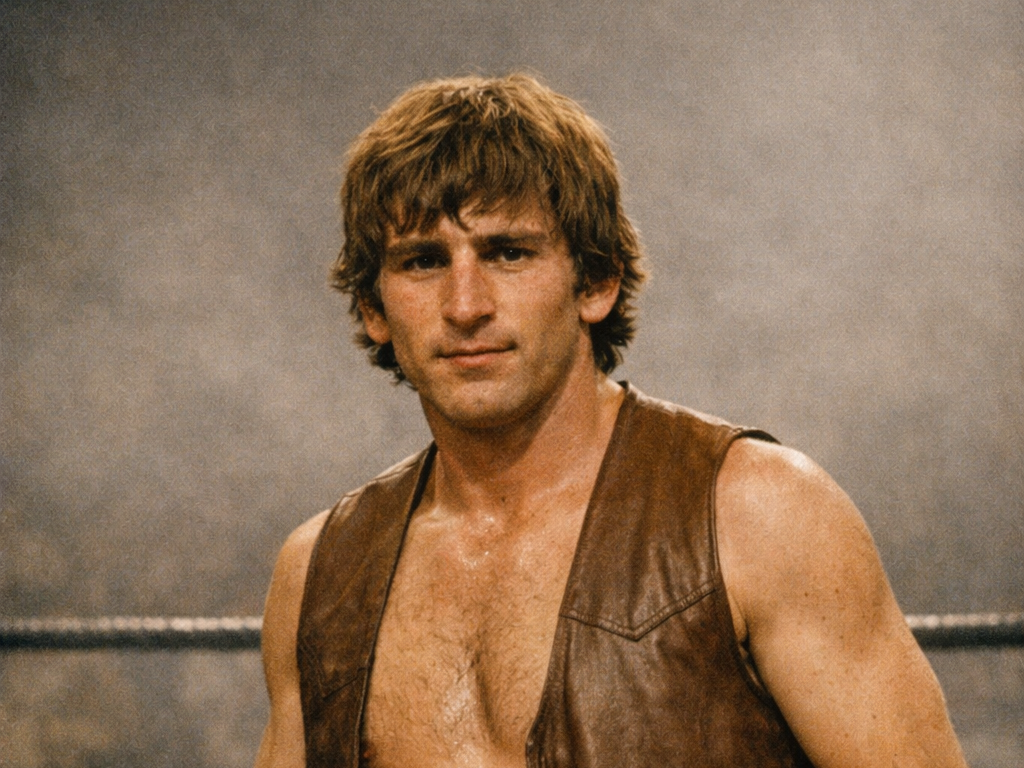
William Ray Carson came out of Tucumcari, New Mexico — a Route 66 pit stop where the motels outnumbered the job prospects. He started training after catching a GWA show in Albuquerque in 1970, debuted at nineteen, and got his ring name because he looked the part: baby-faced, undersized, and clearly the youngest guy on any card he worked.
Carson was a solid hand. Good fundamentals, quick in the ring, never blew a spot. The knock on him was always the same — he had the tools but not the initiative. Left to his own devices, he was a perfectly fine six-minute mid-card act. Put him in a faction, though, and he'd do whatever was asked of him without complaint. That made him useful to bookers for over two decades.
Imminent Domain and the Manifest Dynasty (1975–1980)
The Baron brought Carson into the Manifest Dynasty in late 1975, pairing him with Eddie "The Enforcer" King as the tag team Imminent Domain. The team served as the faction's enforcement arm — they weren't chasing tag gold so much as doing The Baron's dirty work on the undercard while the main event program played out above them.
Carson was a good fit for the role. He bumped well, sold for the babyface comebacks, and made King's power offense look credible on the hot tag. Backstage, he was the guy who'd help load the truck and never ask for a push. The Baron's share manipulation storyline had Carson signing away his voting shares without reading the paperwork — which worked as a character beat because it wasn't much of a stretch.
When the Manifest Dynasty fell apart at Crossroads '80, Carson was left without a spot. No faction, no program, no direction from the office.
The Velasco/Rhodes Years (1980–1983)
Carson landed in a handsome heel stable alongside "After Dark" Adrian Velasco and Bobby Ray Rhodes. On paper, it was a good group — Rhodes was a Great Western Championship holder, Velasco won the belt twice. In practice, Carson was the clear third wheel. He held the ropes, ate the pins in six-mans, and didn't get mic time. The booking was what it was: two legitimate contenders needed a utility guy, and Carson was available.
Brother Bones and the Ministry of Night (1984–1988)
When the office decided to get behind Daniel Dawes' Deacon Dark character and build the Ministry of Night in late 1984, they needed reliable workers around a relative industry newcomer. Carson fit the bill. He had the experience to carry his end of things in the ring, he wasn't going to politic about his spot, and he was willing to commit to the gimmick.
Carson shaved his head, painted his face into a skull, dropped weight to sell the skeletal look, and became Brother Bones — the Ministry's first disciple. His doctrine was the Divine Hunger (Inverted Gluttony), and he worked as Dark's primary enforcer. He tagged with Dark in the Ministers of Pain and with Chuck64 in the Binary Disciples.
The Ministry of Night angle got over initially — the purple lights, the entrance processions, the Midnight Mayhem segments all had a production quality that stood out. But the storyline wore thin with audiences. The pseudo-religious stuff that worked in short doses became repetitive at scale, and the blow-off booking never delivered on the buildup. By late 1988 the angle had run its course, and the office moved on.
Back to the Frontier Circuit (1988–1992)
With the Ministry done, Carson went back to the small towns. He put the Billy the Kid trunks on again, worked the Frontier circuit — Gallup, Roswell, Truth or Consequences, Silver City — and spent his last four years putting over younger talent. He was a veteran who could lead a match and make a green kid look competent, which is exactly what the Frontier towns needed.
He retired in 1992 without fanfare. No farewell angle, no retirement match. The bookings just stopped coming and he went home.
What Kind of Worker Was Billy Carson?
Carson worked a clean American style — armdrags, dropkicks, snap suplexes, solid chain wrestling. His best attribute was hand speed. The Quickdraw (Short-Arm Lariat) was a believable finish because he could snap it off from nowhere — grab the wrist, yank them in, level them.
As Brother Bones, the moveset didn't change much, but the presentation slowed way down. Everything became more methodical, more deliberate. The Quickdraw became The Marrow — same short-arm lariat, but with a ritualistic setup that let Dark direct the pacing from ringside.
In tag work, Carson was a textbook bumper. He'd take the beating, build the heat segment, and make the tag to the bigger man's comeback. Good psychology, no ego about his role.
Presentation
"In His twilight, we find truth."
The Billy the Kid Look
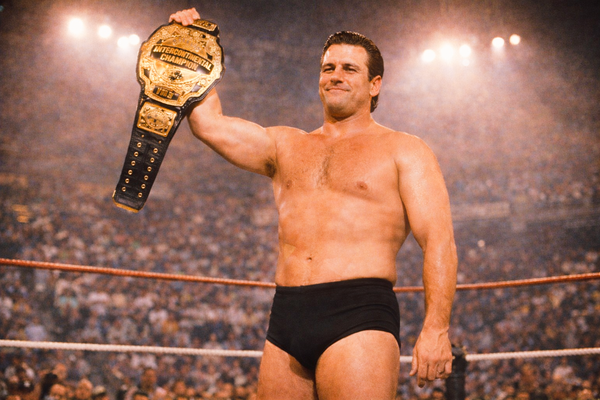
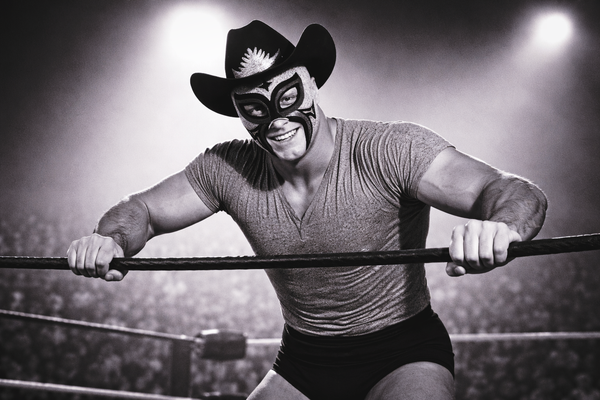
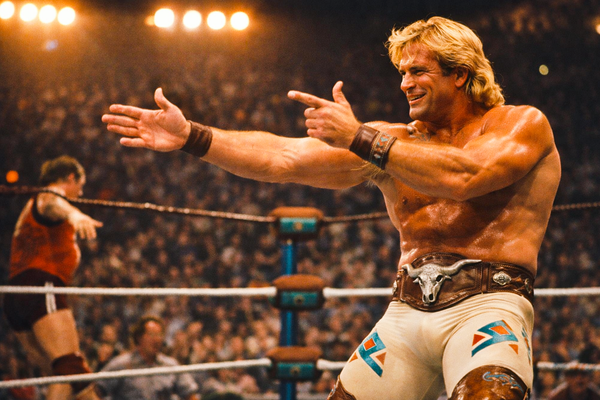
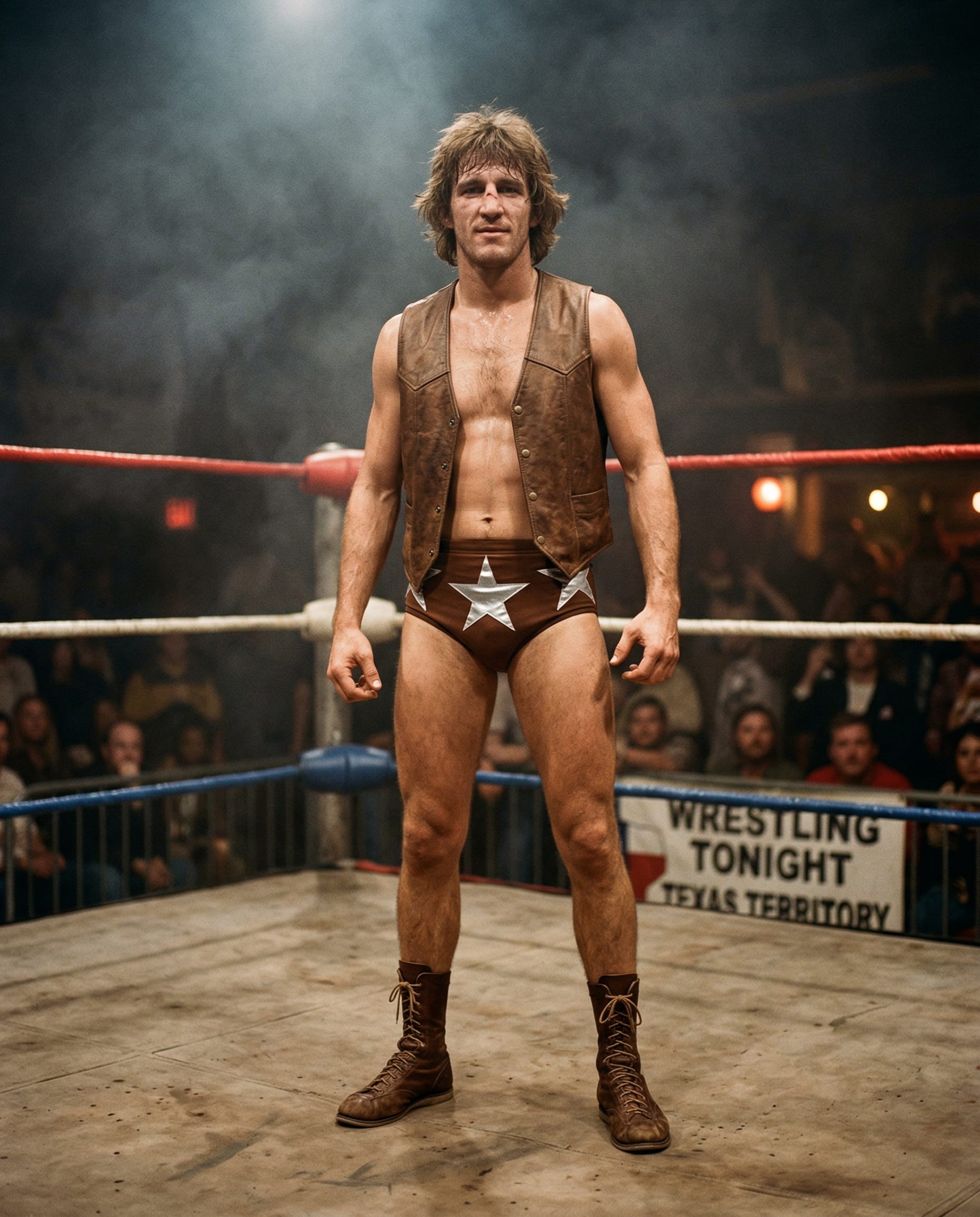
Sandy brown hair, shaggy in the '70s, feathered by the early '80s. Lean, wiry build — not a powerhouse, just a quick guy in brown trunks with silver stars on the hips and a leather vest over bare chest. He looked like he'd driven in from a rodeo. On the late-career Frontier circuit, the hair was thinner and graying, the vest more worn, and the ritual scars from the Bones years were still visible on his forearms.
The Brother Bones Look
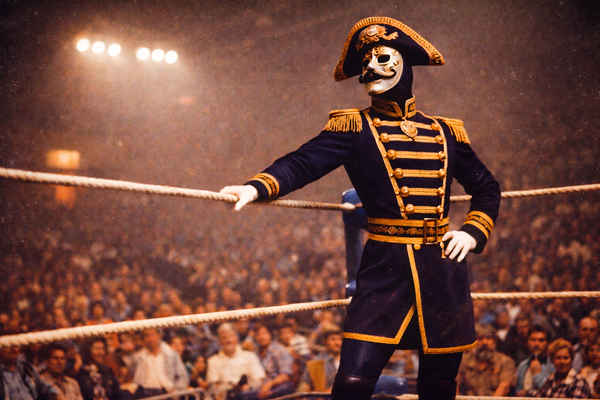
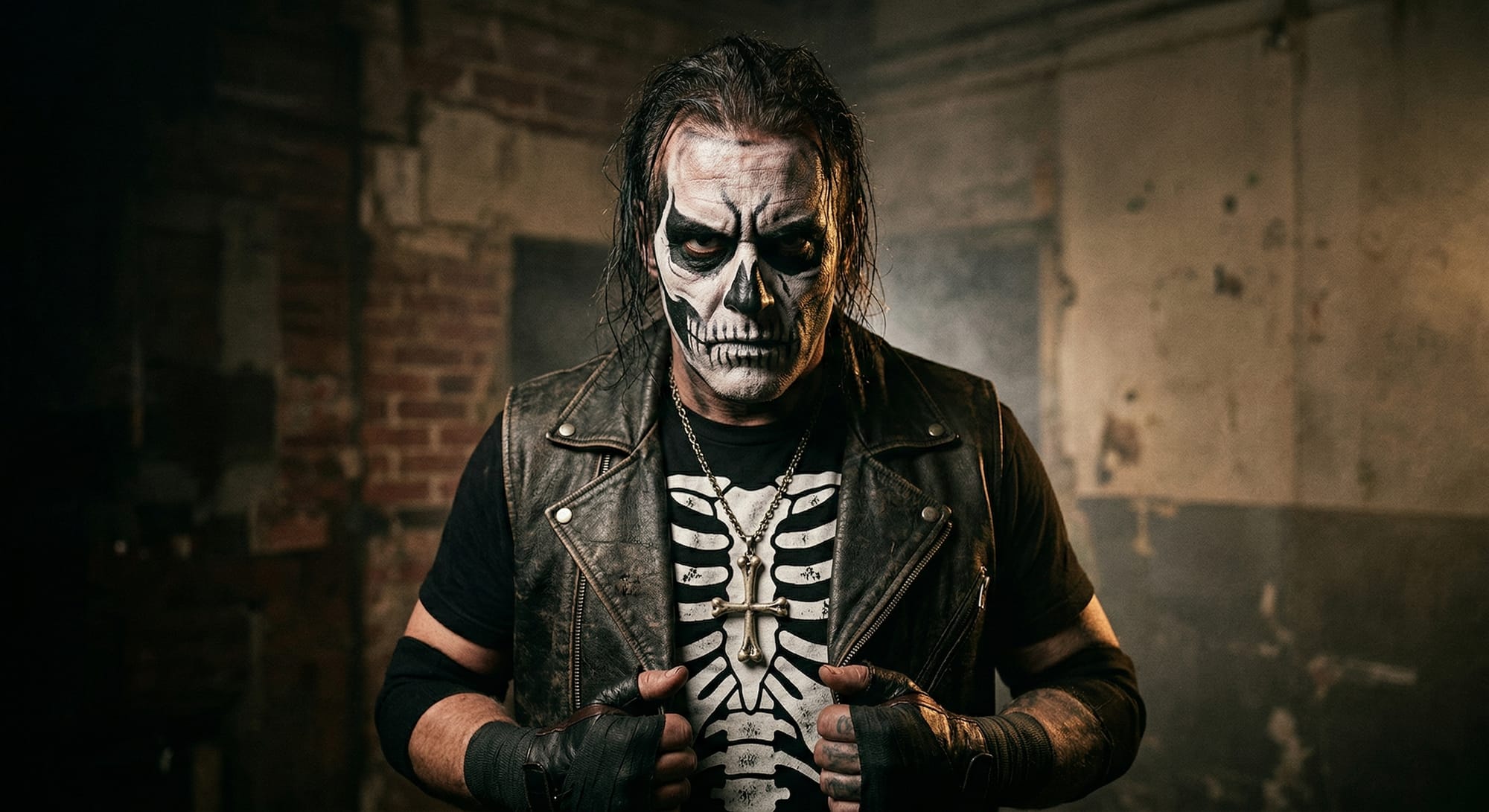
Skull face paint — black around the eyes, white base, exaggerated jaw lines. He dropped about 25 pounds for the gimmick, which made the skeletal look legitimate. Black singlet with a skeleton print, purple trim, ragged purple cowl for Ministry entrance processions. It was a striking visual, and crowds who'd missed the transition genuinely didn't recognize him as the same guy.
Audience Connection
Catchphrases
- "Draw!" — yelled before the Quickdraw; crowds picked it up and started calling it with him
- "In His twilight, we find truth." — monotone Brother Bones line from Ministry segments
How He Got Over (and Didn't)
Early babyface Billy was a merch-table handshake guy. Kids liked him. During the Manifest Dynasty years he drew functional heat as a faction lackey, but nobody was buying a ticket to see Billy Carson get his comeuppance — they wanted The Baron. As Brother Bones, the look and the Ministry entrance got legitimate reactions; he was the kind of act that made parents pull their kids closer at ringside. On the Frontier circuit, he got pops from older fans who remembered the '70s run, and he'd sign whatever they put in front of him.
Championships and Notable Matches
Carson never held a title in the GWA. Twenty-one years, no singles gold, no tag gold.
Faction affiliations: Manifest Dynasty / Imminent Domain (w/ Eddie King, 1975–1980) · Velasco/Rhodes stable (1980–1983) · Ministry of Night / Ministers of Pain (w/ Deacon Dark) / Binary Disciples (w/ Chuck64) (1984–1988)
Legacy: The GWA's Best Utility Player
Billy Carson's career is the territory system working exactly as designed. Not everybody gets to be the guy. Somebody has to make the guy look good, and Carson did that for two decades across three different eras and four different factions without ever being the focal point of a major program.
He was a good worker who always did what the office asked — tag with Eddie King, carry Adrian Velasco's bags, paint his face for Daniel Dawes' cult gimmick, go back to the small towns and get young guys ready. None of it was glamorous. All of it was necessary.
The fact that he lasted 21 years without a title run, without a main event push, and without anyone ever questioning whether he belonged on the roster says more about his value than any championship reign would have. Every territory had a Billy Carson. Most of them didn't last half as long.