Wrestling Viceroy
A delusional colonial bureaucrat who enforces imperial order through ceremony, convinced he represents an authority that publicly denies his existence—the Wrestling Viceroy is territorial wrestling's most pompous tyrant.

BASIC INFORMATION
Ring Name: The Wrestling Viceroy
Nickname(s): His Excellency of the Pacific
Origin: The Administrative Colonial Offices of Her Majesty's Unwanted Pacific Holding
Height: 6'2"
Weight: 240 lbs
Finishing Move: The Imperial Decree (elevated diving forearm)
CHARACTER PROFILE
Background
The Wrestling Viceroy arrived in GWA territories during the Golden Age (1979-1988) not as a wrestler, but as an office—a governing presence imposed upon what he considered unruly, uncultured territories incapable of self-rule. Speaking with the refined diction of British theater and the condescending patience of a colonial administrator, the Viceroy claimed representation from the Western Independent Territorial Sanctioning Authority (WITSA).
When WITSA repeatedly and publicly denied any affiliation, the Viceroy dismissed these statements as "necessary secrecy" and "administrative necessities." His central philosophy remained unchanged: "Authority does not require consensus."
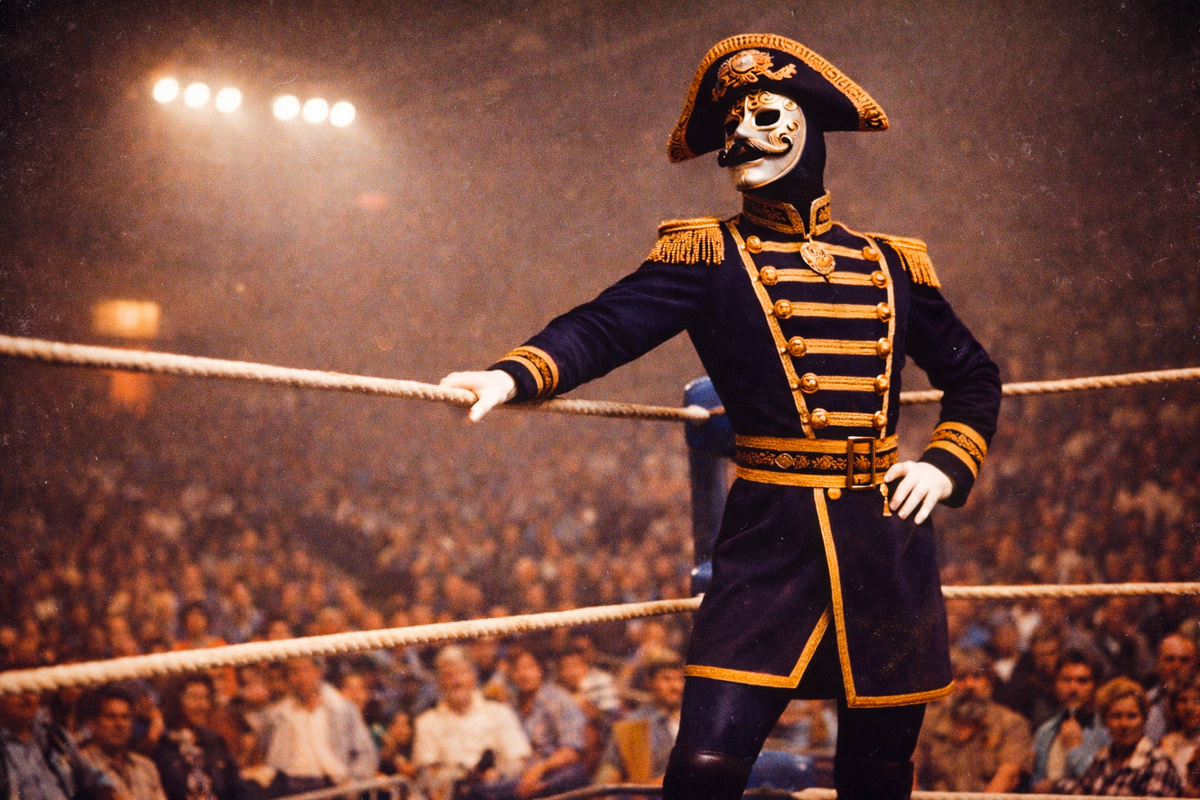
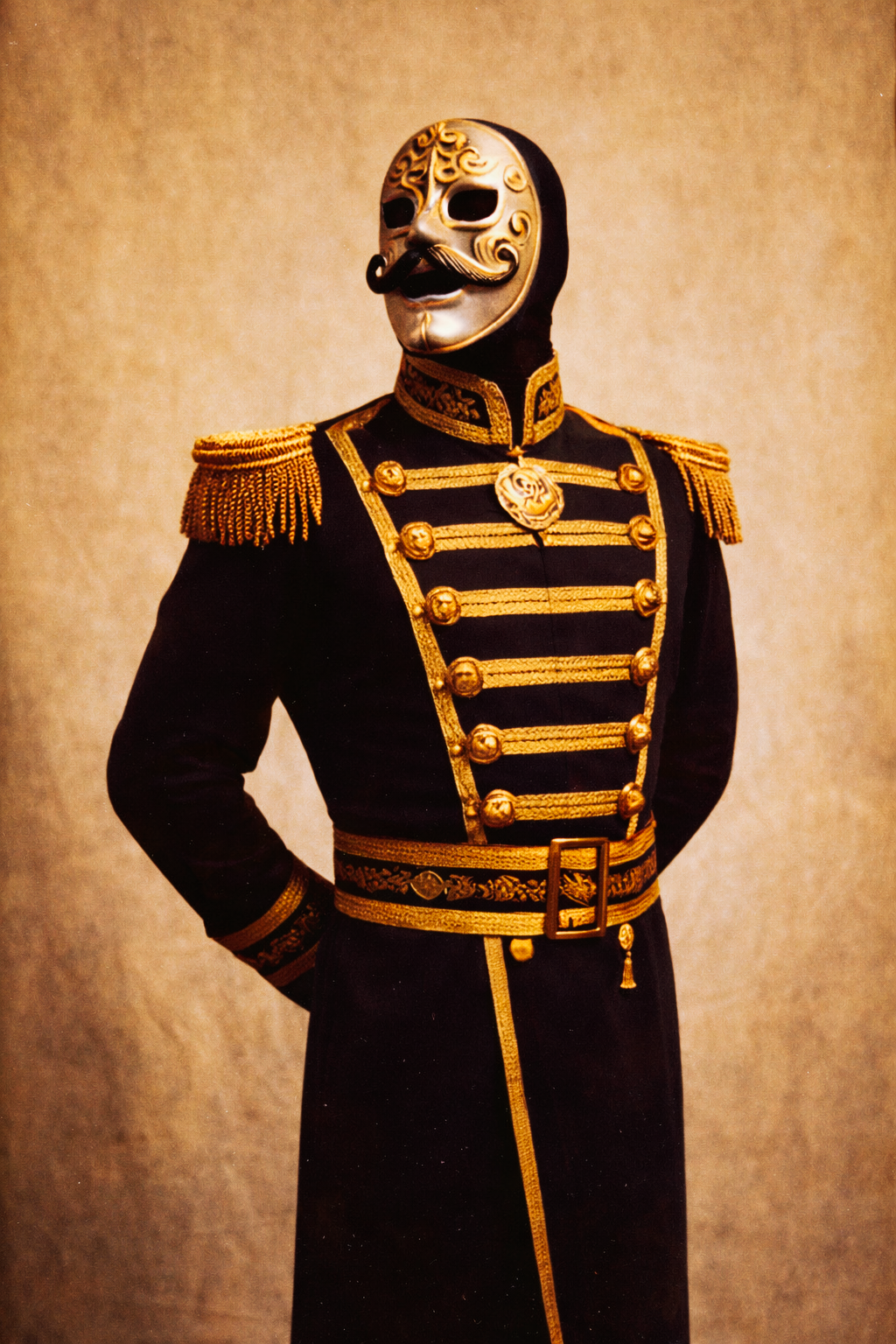
The mask—a rigid, silver-finished piece with an aristocratic expression and curled mustache motif—wasn't meant to create mystery. It created distance. It transformed a man into an institution, removing vulnerability, identity, and negotiation. The Viceroy didn't wrestle to entertain. He wrestled to regulate.
Personality Traits
- Pompously authoritarian and theatrically tyrannical
- Treats fans as subjects, opponents as administrative problems, referees as junior functionaries
- Especially condescending toward Pacific Islander wrestlers and border-region talent
- Expresses disappointment rather than anger
- Values form and ceremony above consent or victory
PRESENTATION
Physical Appearance
The Viceroy presented himself as a colonial official who wandered into a wrestling ring and refused to leave. His metallic silver mask featured an emotionless aristocratic expression with deep-set eye holes that cast permanent shadows across his face. He wore dark navy or crimson uniform-style trunks with gold trim and insignia, tall black polished boots, and gloves or cuffs emphasizing formality.
Outside the ring, he appeared in threadbare military-style coats, frayed dress shirt cuffs, and scarves instead of ties—always overdressed, always outdated. His broad-shouldered build and reflexively upright posture made him appear taller than his 6'2" frame, and he rarely slouched, even when hurt.
Ring Style
A slow, grinding technician who treated holds like legislation. The Viceroy employed mat-based control and grinding power holds, using long pauses to assert dominance and punishing movement rather than mistakes. He adjusted his cuffs before violence and would pause mid-match to adjust his mask, often using referee warnings about mask-touching to regain advantage.
His finisher, The Imperial Decree, was delivered with full theatrical extension from an elevated position, as if passing final judgment.
AUDIENCE CONNECTION
Catchphrases
- "You there, you there—wherever from. Aren't you a loyal subject to your Viceroy?"
- "By decree of WITSA, I hereby regulate this lawless federation."
- "This colony… is now under administration."
Fan Interaction
The Viceroy never acknowledged fan reactions as legitimate input—only as noise requiring regulation. His entrance featured a slow, deliberate walk where he inspected the ring like leased property. He removed his hat carefully, dusted it, and handed it off with visible expectation of respect that was never granted.
When crowds booed, he would pause—longer than comfortable—and wait for silence before issuing his proclamations. He spoke as if issuing formal statements, using scrolls, folders, medals, and seals. The crowd's refusal to cooperate with his theatrical authority became part of his heat, and his insistence on ceremony in the face of chaos made fans desperate to see him humbled.
LEGACY
The Wrestling Viceroy represented something uniquely uncomfortable in late 1970s/early 1980s wrestling: authority performed so convincingly that fans needed to see it humbled. In an era when distrust of institutions ran deep, the Viceroy weaponized formality and ceremony to generate genuine heat.
His ongoing gag—claiming representation from WITSA while the organization repeatedly denied knowing him—added a layer of delusion to his tyranny. The character asked an uncomfortable question: what happens when someone confuses performance with legitimacy, when the mask becomes more real than the person beneath it?