"The Patriot" Paul Johnson
From the dusty parade grounds of Fort Huachuca to the electric GWA ring, "The Patriot" Paul Johnson marched into wrestling history. A living tribute to the Buffalo Soldiers, he fought with military precision and an unwavering spirit, grappling not just for victory, but for recognition and respect.
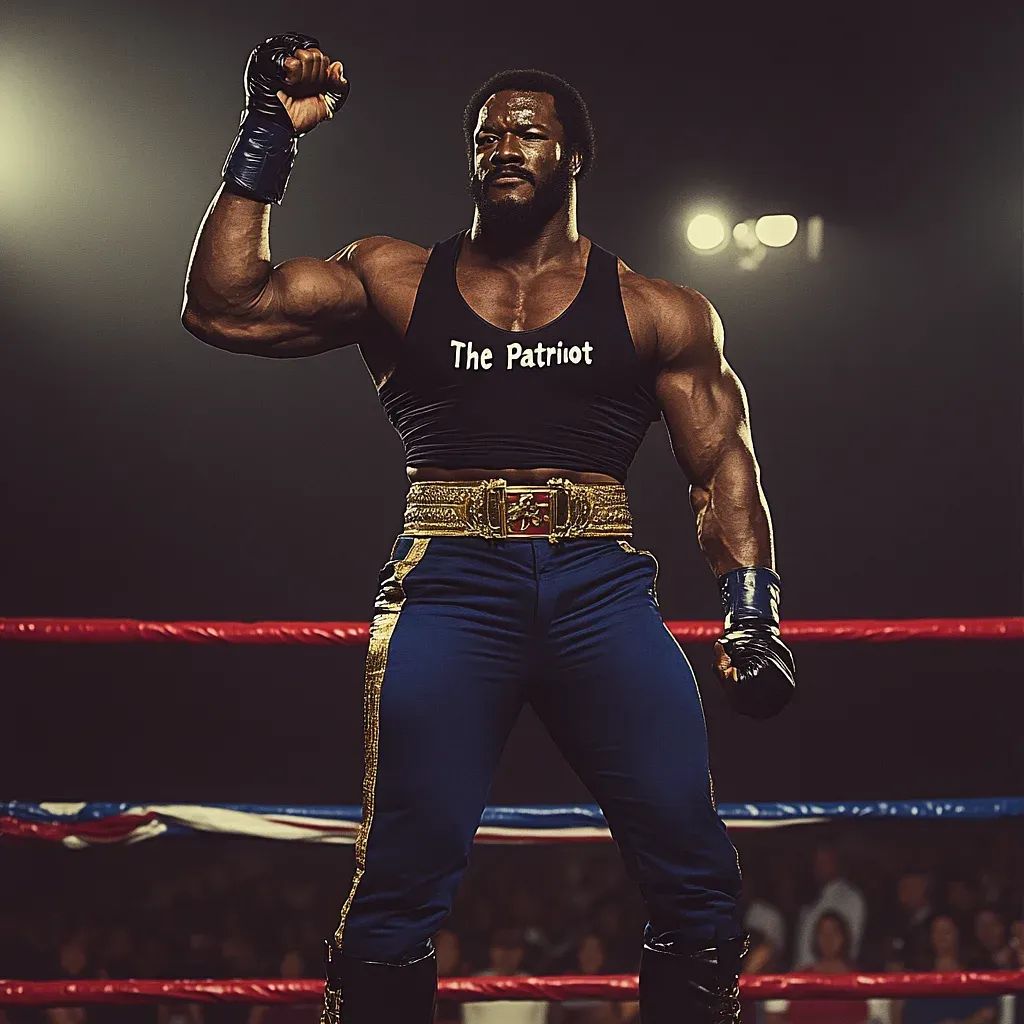
Paul "The Patriot" Johnson wrestled in the Great Western Alliance, the American territory promotion chronicled across this site. He worked the Southwest territory from 1971 to 1991. Other promotions have used the same ring name; this profile covers the GWA wrestler.
AT A GLANCE
- Name: Paul Thomas Johnson
- Ring name: "The Patriot"
- Born: 1947, Fort Huachuca, Arizona
- Billed from: Fort Huachuca, Arizona
- Height: 6'3"
- Weight: 250 lbs
- Active: 1971 to 1991
- Territory: Southwest
- Signature moves: The Cavalry Crush, the Buffalo Soldier Slam
- Finishing move: The Charge
- Championships: GWA Intercontinental Championship (2), GWA Southwest Championship (3)
EARLY LIFE
Paul Thomas Johnson was born in 1947 at Fort Huachuca, Arizona, the post where the 10th Cavalry garrisoned Black troopers from the 1890s. His grandfather served in the First World War and told him about the Buffalo Soldiers, the regiments that rode the Western frontier and came home to a country that had no place for them.
In the summer of 1963 Johnson, then sixteen, went to a veterans' gathering at Fort Huachuca and met a Second World War veteran and civil rights organizer from Mississippi. The man talked about service and about the fight still going on at home. Days later he was shot dead in his own driveway. Johnson enlisted as soon as he reached age.
He went through basic training at Fort Jackson, South Carolina in early 1965, finished the Basic Airborne Course at Fort Benning that fall, and passed the Special Forces Qualification Course at Camp Mackall in early 1966, taking the Ranger Tab. He deployed to Vietnam in mid-1966 as a sergeant with a provisional Long Range Reconnaissance Patrol unit attached to the 1st Cavalry Division, working out of Cam Ranh Bay and An Khe on patrols near Bien Hoa and Xuan Loc. He earned a Bronze Star with V device. In February and March 1968 his unit ran Operation Uniontown III-Boxsprings: 117 patrols, 91 enemy sightings, 33 firefights. He came home in mid-1968 and took his first wrestling dates three years later.
CAREER
Breaking in (1971 to 1975)
Johnson debuted in the GWA in 1971 and worked the Southwest circuit: Phoenix, Tucson, Albuquerque, El Paso, and the border towns below them. He built the Patriot character on the 10th Cavalry, down to the blue and gold and the salute before the bell. In 1973 he founded the Frontier Justice League and led it for the next nine years.
Brad Boone and the Intercontinental Championship (1976 to 1979)
The Southwest Championship changed hands five times in 1976 and Johnson never got it. The belt went from "Mad Dog" Marty Richardson to Jackie Burns to Brad Boone to El Fuego to Spike Striker and back to Burns while Johnson worked underneath it. He won every recorded singles match he had that year: Ivan Gregorovich on 11 February, B. Beauregard Blackthorn on 1 May, Ivan Petrovic on 15 July, Brad Boone on 25 September, and Gregorovich again on 4 December.
The championship he did win came from outside the territory. On 3 July 1976 at Showdown Spectacle '76 he beat Brad Boone for the GWA Intercontinental Championship in 16:10, a clean finish. He held it 167 days and dropped it to "Red Dragon" Li Fang on 18 December.
He took it back from Boone on 14 June 1978 in a Texas Death Match in Tulsa, Oklahoma, and held it 124 days. Boone regained it in Tombstone, Arizona on 17 October 1978 with a branding iron.
In October 1979 Dr. Geode broke into a veterans' tribute Johnson was leading on GWA High Noon and called the Buffalo Soldiers "ancient rubble." Johnson beat Barrett Mason in San Francisco on 13 October. Geode beat Johnson on 3 November after Eddie "The Enforcer" King came through the ropes. Commissioner Jack Carson sanctioned a steel cage, and Johnson won it at Desert Steel Supreme in Phoenix on 22 December 1979.
The World title challenge (1981)
On 14 August 1981 at Thunder on the Range, Johnson challenged Shogun Hideaki for the GWA World Heavyweight Championship. Hideaki won in 15:22 and kept the submission locked in long after the bell. Johnson left the building on a stretcher. It was the only World Heavyweight Championship match of his career.
The Southwest Championship (1982 to 1991)
He won the Southwest Championship on 23 September 1982, six years after chasing it through 1976, and he took it from Brad Boone. The reign ran 90 days.
He beat Sterling Radcliffe for it on 22 November 1985 and held it 88 days across the new year. He won it a third time on 26 May 1989 from Billy "The Kid" Carson at the age of 42, and held it 89 days. He kept taking Southwest dates until 1991.
THE FRONTIER JUSTICE LEAGUE
Johnson founded the Frontier Justice League in 1973 and led it until it broke up at the end of 1982. Seven wrestlers wore the seven-pointed star: Johnson, "Canadian Crusher" Chris Coleman out of Hamilton, Jake "The Blackfoot Brawler" Hipp of the Siksika Nation, A Man Named Sioux, the old railriding technician Boxcar Bo Bradley, Calamity Queen, and Tommy "Dusty Trails" Tucker. They wrestled against the spread of outside money into the territories and they answered each other with a recognition line: "How's the dust?" "Still settling."
Their best-known stand came in the fall of 1973 at Silver Creek, Montana. Promoter Dan "Grizzly" Wilson had thirty days to vacate the Miners' Hall after the Manifest Dynasty bought the town's mining operations. Johnson brought the League in. The Dynasty spent a week on cease and desist orders, bought-off officials, a safety condemnation, and an offer to each League member to walk away. Bradley turned down ten times what the building was worth. Johnson then offered The Baron a Stampede Showdown under Sundown Rules: seven against seven, no time limit, eliminations by pin, submission, or over the top rope, and no disqualifications once the sun went down. The League won it. A Man Named Sioux eliminated The Baron last.
Tucker left the League in 1974. "Sunrise" Sam Dakota came in near the end of its run.
CHAMPIONSHIPS AND ACCOMPLISHMENTS
- GWA Intercontinental Championship (2 reigns)
- 3 July 1976 to 17 December 1976 (167 days). Beat Brad Boone at Showdown Spectacle '76 in 16:10. Lost to "Red Dragon" Li Fang.
- 14 June 1978 to 16 October 1978 (124 days). Beat Brad Boone in a Texas Death Match in Tulsa, Oklahoma. Lost to Boone in Tombstone, Arizona.
- GWA Southwest Championship (3 reigns)
- 23 September 1982 to 22 December 1982 (90 days). Beat Brad Boone.
- 22 November 1985 to 18 February 1986 (88 days). Beat Sterling Radcliffe.
- 26 May 1989 to 23 August 1989 (89 days). Beat Billy "The Kid" Carson.
- Founder and leader of the Frontier Justice League, 1973 to 1982
- Challenged for the GWA World Heavyweight Championship, 14 August 1981
RIVALRIES
Brad Boone. The two met across sixteen years. Johnson beat Boone for the Intercontinental Championship in 1976 and again in 1978, and Boone took it back both times. Johnson also beat him in a non-title match in September 1976, and their last recorded meeting was the 1982 Southwest Championship match that gave Johnson his home territory's belt for the first time. Six recorded matches, three championships changing hands between them.
Dr. Geode. The 1979 feud started when Geode interrupted Johnson's veterans' tribute and smashed a replica of his commemorative plaque. It ran through Las Vegas, San Francisco, and Phoenix over three months and closed inside a steel cage on 22 December 1979.
Shogun Hideaki. One match, 14 August 1981, for the World Heavyweight Championship. Hideaki held the submission after the bell and Johnson was carried out. The GWA never rebooked it.
IN THE RING
Entrance
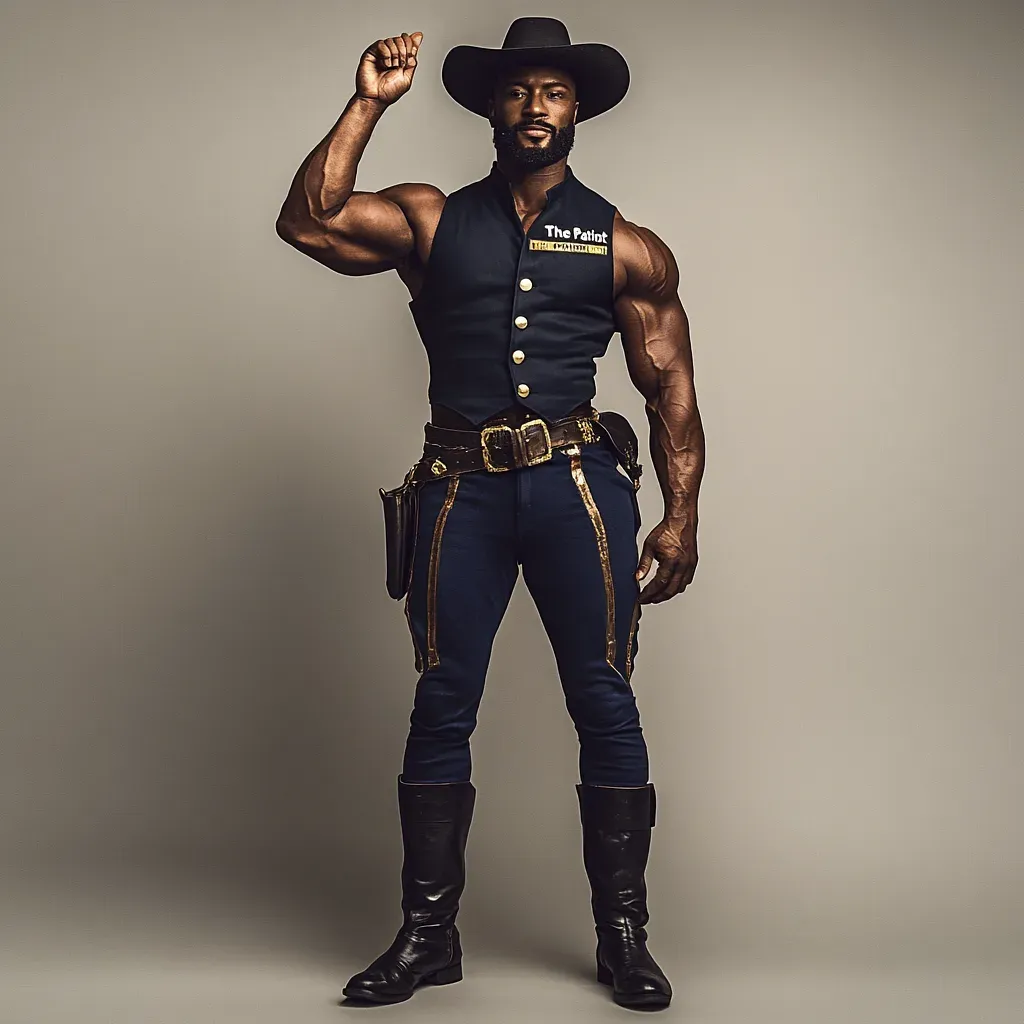
Bugle calls and a cavalry march brought him out, over the sound of hoofbeats and a bugle charge. He saluted the crowd at the top of the aisle, took off his hat at ringside, and stepped through the ropes.
Appearance
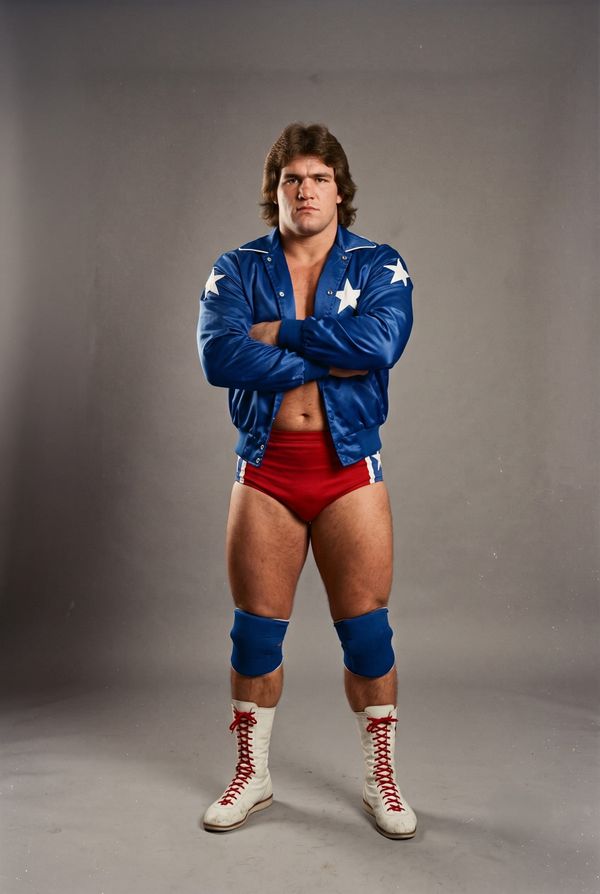
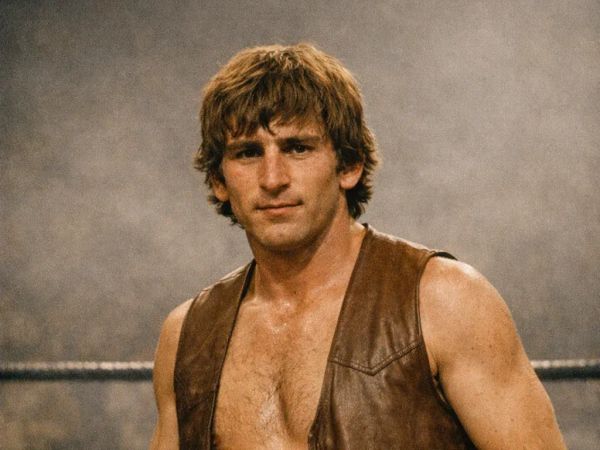
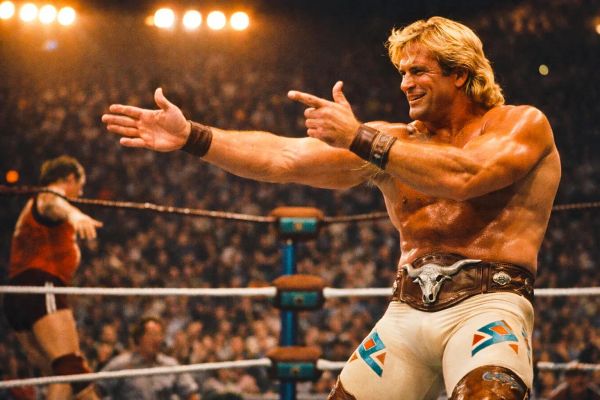
Johnson stood 6'3" and weighed 250 lbs. He wrestled in dark blue tights with gold piping, polished black boots, and a sleeveless navy vest trimmed in gold, with a wide-brimmed black cavalry hat and a gold cord. His belt buckle carried the 10th Cavalry emblem and he had a buffalo tattooed on his right forearm. He kept his hair close-cropped and his mustache trimmed, and a scar ran across his left cheekbone.
Ring Style
He wrestled a deliberate, methodical match, working one limb until it gave out before he went for the finish. He wrestled inside the rules against opponents who did not, which cost him the Intercontinental Championship in Tombstone in 1978 and cost him a match to Dr. Geode in 1979. He worked with younger wrestlers on Southwest cards throughout the 1980s.
Signature Moves
- The Cavalry Crush, a running shoulder block off an Irish whip
- The Buffalo Soldier Slam, a spinning side slam
- The Charge, a spear, and his finish. He stepped back and saluted his opponent before he threw it.
IN HIS OWN WORDS
"Ready and Forward, Geode. You won't erode what's made of steel."
"You may break stone, Geode, but honor? That's unshakable."
Catchphrases
- "Ready and Forward!"
- "Rough Riders, Mount Up!"
The Frontier Justice League rode under a line of his: "Seven souls. One code. We don't ride for gold, we ride for justice."
LEGACY
Johnson took GWA dates for twenty-one years and held five championships. He worked one territory for his whole career and became the Southwest's standing main event through the Golden era and into the Traditions years.
He used his time on camera to talk about the Buffalo Soldiers and about Black servicemen whose records had gone unread, and he did the same work off camera at veterans' hospitals and schools. After Silver Creek he set up a training center in the town, which the territories came to call Sundown Sanctuary.
When he handed the seven-pointed star to the Maharaja Dev Singh there was no ceremony and no speech. He said: "You're already doin' it."
MORE FROM THE GWA
The Great Western Alliance archive covers 1957 to 1993: wrestler profiles, territory histories, and every title lineage. New entries go out to subscribers as they are written. Subscribe for free.
Browse more GWA wrestlers or read about the Southwest territory.