Takeshi Matsuda, Raiken
Like thunder in a cloudless sky, Raiken arrived in GWA without warning. The stoic master of strong style brought honor to chaos, precision to power, and introduced Western audiences to a warrior's path where respect was earned through every strike and submission.
Basic Information
- Ring name: Takeshi Matsuda, "Raiken" (雷拳, Thunder Fist)
- Born: March 15, 1940, Sapporo, Hokkaido, Japan
- Billed from: Sapporo, Hokkaido, Japan
- GWA career: 1965 to 1977
- Territory: Columbia
- Height and weight: 5'9", 234 lbs
- Finishing move: The Thunder Strike (palm strike)
- Founder of: Bushido Pro Wrestling (Japan, 1973)
Biography
Takeshi Matsuda arrived in the Great Western Wrestling Alliance in 1965 and became one of the most important foreign wrestlers in the promotion's history. He brought strong-style puroresu, stiff strikes, deep submissions and a psychology built on escalating tension, into a frontier product that had never seen anything like it, and he made the collision the point rather than the problem.
Billed from Sapporo and trained in Japanese martial arts, he carried himself as a warrior rather than a showman. Across twelve years he grew from mysterious foreign challenger into the first Japanese GWA World Heavyweight Champion, and then into something rarer still: a wrestler who left to build his own promotion and bridge two national traditions.
The 1965 World Heavyweight Tournament
Matsuda announced himself immediately. Representing Japan in the inaugural GWA World Heavyweight Championship tournament, he ran deep into the bracket, meeting "Ironside" Ivan Gregorovich in a semi-final that set brutal Soviet power against technical precision and strong-style striking. Crowds who had never seen either man rallied behind the disciplined newcomer. It was the first sign that a Japanese wrestler could headline an American territory on his own terms.
Championships
Matsuda spent most of his career as a fixture of the GWA's West Coast title scene, trading its regional championships back and forth from 1965 to 1972 before his single reign at the very top of the promotion. He held GWA gold six times.
- GWA Columbia Championship. June to August 1965. His first title in the GWA, won the same summer he reached the semi-finals of the inaugural World Heavyweight tournament.
- GWA Great Western Championship. December 1966 to July 1967. He took it from Miguel "Rio Grande" Ramirez and held it more than seven months.
- GWA Pacific Coast Championship. May to September 1968.
- GWA Columbia Championship. April 1969 to August 1970. His longest reign, sixteen months anchoring the Columbia territory.
- GWA World Heavyweight Championship. September to December 1970. He beat "El Águila" Pedro Ramirez in Seattle at Thunder's Requiem and held the title roughly 100 days before dropping it to Mountain Man Mark Jensen.
- GWA Columbia Championship. December 1972 to February 1973. A final regional reign before he turned his focus to Japan.
His run to the World Championship carried a weight beyond the belt. Years earlier he had taken the Great Western Championship from Miguel "Rio Grande" Ramirez, and their rivalry became one he valued above almost any other. After Miguel's death the World title passed to his cousin, Pedro Ramirez, who struggled to carry it. Matsuda issued his challenge directly, as much to honour the man he had faced years before as to claim the championship. He won it at Thunder's Requiem, a bout framed as one hundred days of mourning, and became the first Japanese wrestler to hold the GWA's highest title.
Bushido Pro Wrestling
Matsuda's World title reign made him a star in Japan, where fans hungry for realistic combat sport had watched a countryman conquer American wrestling. After losing the belt to Jensen, he began turning that attention into an institution. In 1973 he founded Bushido Pro Wrestling in Kawasaki, backed by martial-arts dojos, former sumo wrestlers, Japanese investors and his own GWA savings, under the motto The Power of Spirit Transcends Technique.
He named himself its first Heavyweight Champion and built its house style around shoot-influenced strikes and submissions, round-based major bouts and minimal theatrics: athletic credibility over spectacle. For the rest of the decade he worked a dual role, keeping a reduced but prestigious GWA schedule while training young talent at the Kawasaki dojo, and in 1979 the two promotions formalised the partnership he had spent years embodying.
Persona
Raiken is stoic, honourable and unfailingly respectful, a wrestler whose code comes from Bushido. He refuses to cheat even when cheating would be easy, and he treats every opponent as a test of himself first. That code made him hard to place for American crowds used to clear heroes and villains: he was neither, a disciplined outsider whose honour read as foreign until it read as admirable. Above any single match, he was a cultural ambassador, bridging East and West at a time when the two wrestling traditions barely acknowledged each other.
Wrestling Style
Matsuda wrestled with precision and patience, building matches on accurate striking and mat-based submissions. His ring psychology, the slow tightening of control until the finish felt inevitable, was ahead of most of the territory. He rarely rushed. The storm, as his own tagline had it, was silent before it roared.
Signature Moves
- The Thunder Strike — an open-palm strike, his finish.
- The Lightning Lock — a punishing shoulder hold.
- The Dragon Clutch — a cobra clutch used to wear opponents down.
- Roundhouse kicks and a jumping knee strike, carried over from his martial-arts training.
Appearance
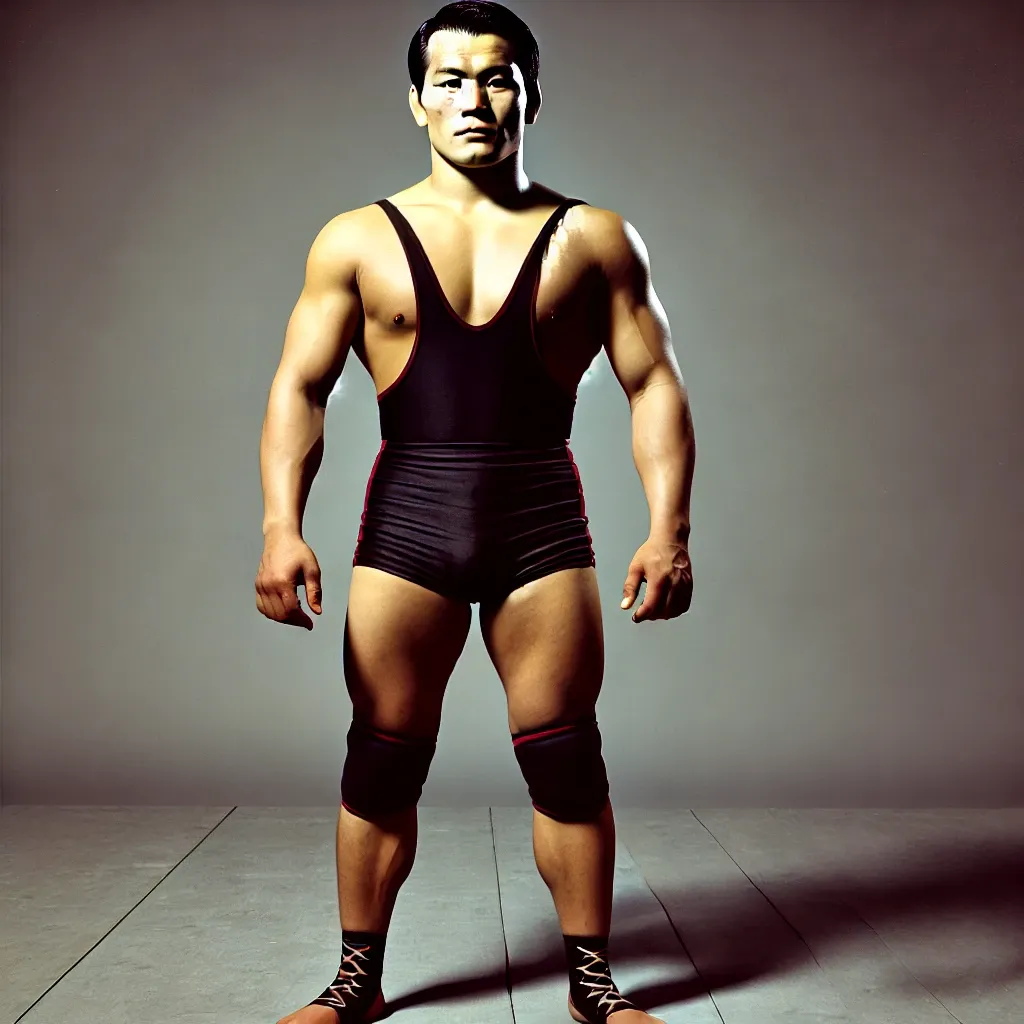
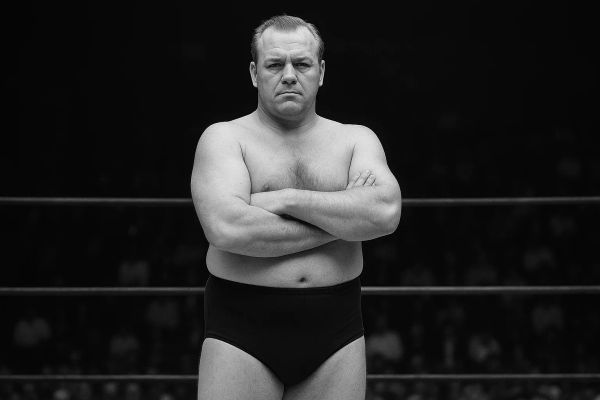
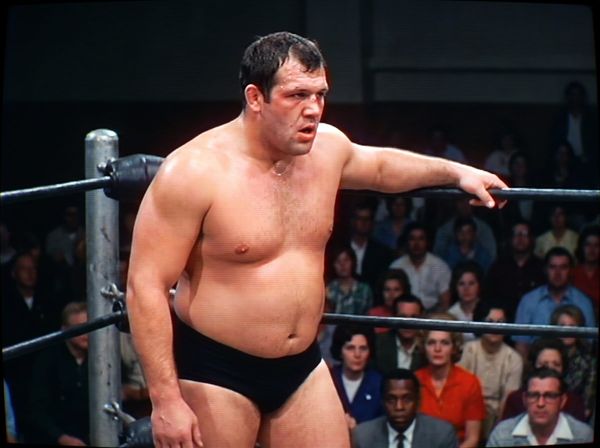
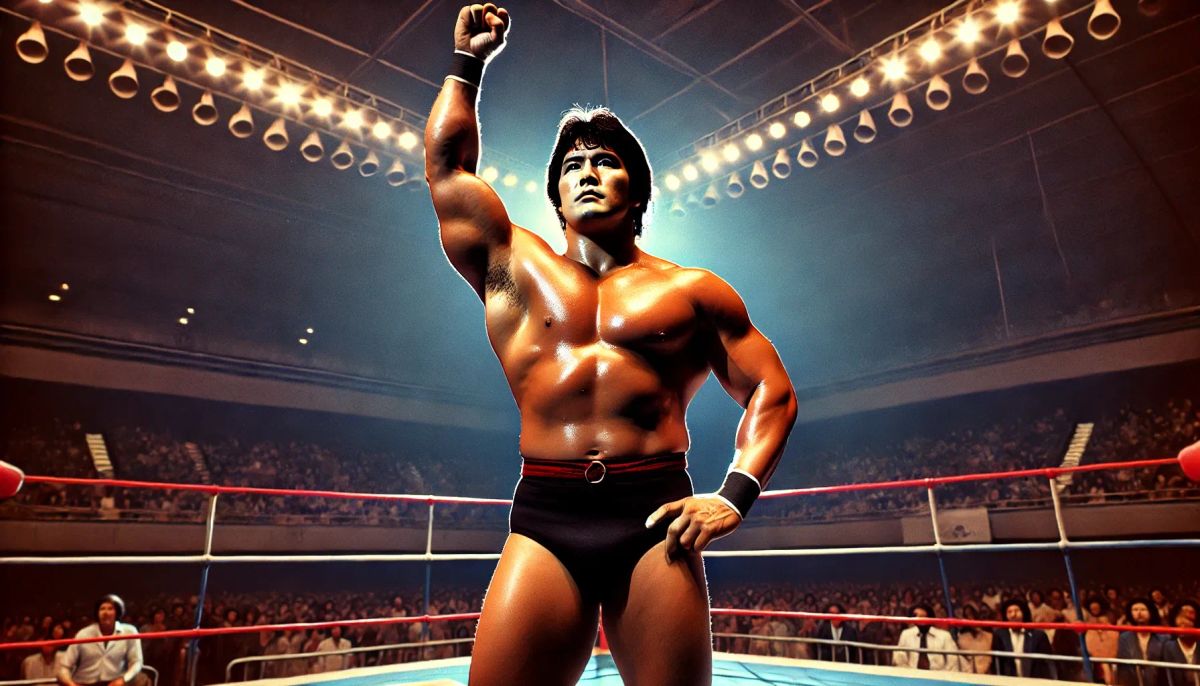
Stocky and powerfully built at 5'9" and 234 pounds, Matsuda wrestled in black trunks with red trim and, unusually for the territory, barefoot, a nod to the martial-arts tradition he came from. Black hair, a stoic and unreadable face, and a bearing that stayed composed whether he was winning or being worn down.
Legacy
Matsuda's importance runs well past his championships. He was the first Japanese wrestler to hold the GWA World Heavyweight Championship, he pioneered Japanese-American wrestling relations inside the promotion, and through Bushido Pro Wrestling he turned his own discipline into a lasting institution that shaped both national scenes for decades. He opened a path that later Japanese and joshi wrestlers in the universe would follow.
He is remembered as a symbol of discipline, perseverance and honour in the GWA's golden years: proof that a wrestler could win over an American territory, and its top title, without ever pretending to be something he was not.